U.S. Entertainment Stocks Decline Following Trump's Proposed 100% Tariff on Foreign-Made Films
- The New York Editorial Desk - Arif

- May 5, 2025
- 2 min read
Tone & Political Bias: Moderately Right-Leaning
Why: The article focuses primarily on former President Trump’s economic argument, emphasizing his stance and messaging, with limited counterpoints from opposing views.
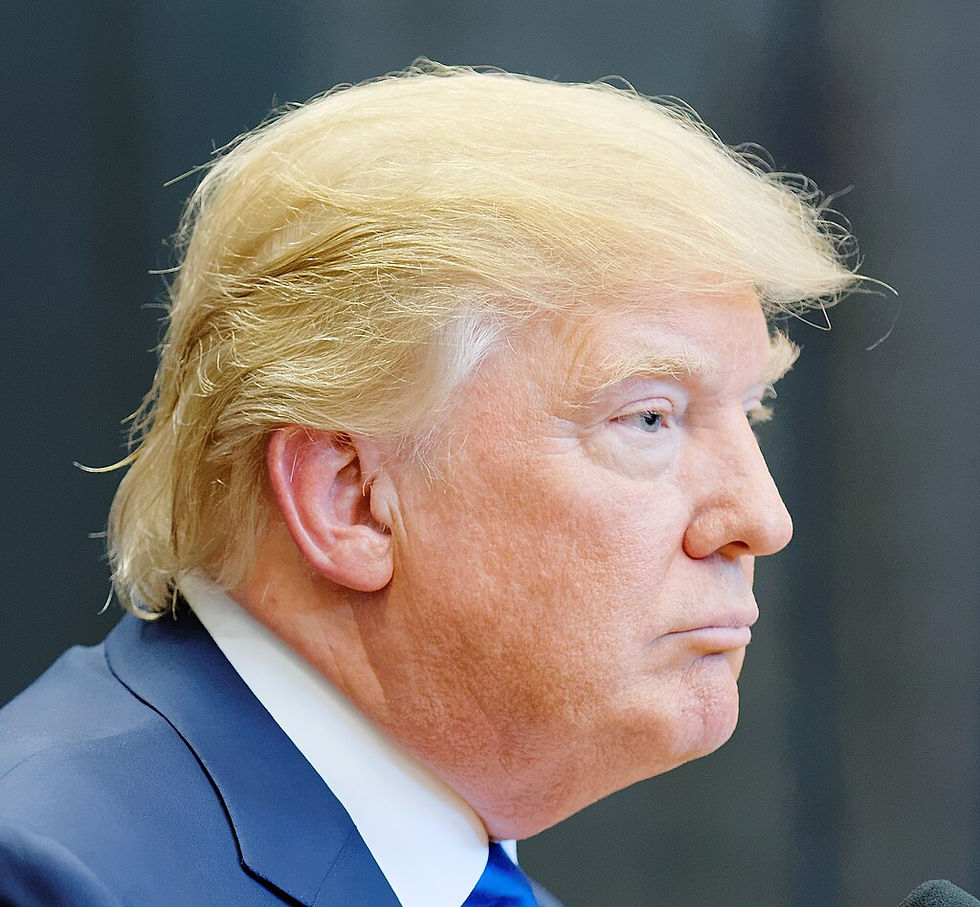
Trump's Tariff Proposal
On May 5, 2025, former President Donald Trump announced that he would seek to impose a 100% tariff on all films produced outside of the United States. He claimed that foreign governments were offering tax breaks to attract American film productions, which he framed as a threat to national security.
Trump made the announcement through a social media post, stating that the U.S. Commerce Department and U.S. Trade Representative Jamieson Greer had been directed to move forward with the policy. The intended goal is to incentivize American film production by financially penalizing content made overseas.
While the proposal targets foreign-made films, it remains unclear how the administration would technically enforce tariffs on intangible goods like movies, which do not follow traditional customs channels.
Market Reaction
The announcement had an immediate impact on entertainment stocks, reflecting investor concerns about the implications of the tariff plan.
Netflix (NFLX) shares fell over 4% in early trading, though losses later eased to just over 1%.
Walt Disney Co. (DIS) saw its stock drop by more than 2% after the market opened.
Warner Bros. Discovery Inc. (WBD) and Paramount Global (PARA) also experienced early trading losses of over 2%.
Many of these companies rely on international filming locations to benefit from cost savings and tax incentives. Investors fear that punitive tariffs on such content could disrupt budgets, release schedules, and profitability.
Industry and Legal Concerns
The entertainment industry and legal analysts voiced several concerns:
Feasibility of Enforcement: Legal experts questioned how a tariff would be practically applied to films, which are digitally distributed and not physically imported.
Legal Authority: California officials challenged the legal basis of the proposed tariff. They argued that the president may not have the authority under current law to impose such a measure unilaterally.
Risk of Retaliation: The Motion Picture Association previously reported that the U.S. film and TV sector generated a $15.3 billion trade surplus in 2023. Industry insiders worry that aggressive tariffs could trigger countermeasures from other countries, ultimately harming American media exports.
Political Appointments
To boost support for domestic film production, Trump appointed actors Jon Voight, Mel Gibson, and Sylvester Stallone as "special ambassadors" to the Hollywood industry. Their roles are expected to involve advising the administration on cultural and economic strategies tied to revitalizing the U.S. film sector.
Ongoing Developments
Although no official tariff policy has been enacted yet, the White House confirmed that all options are on the table. The administration described its goal as defending both national and economic security by encouraging more production to stay within U.S. borders.
As the proposal develops, production companies, investors, and international partners are closely watching for any formal implementation and preparing to adjust accordingly.
Would you like a version of this formatted for social media or newsletter use?


Comments